
What Lynn Noticed
The résumé tells me nothing about her. Forty clients tells me everything.
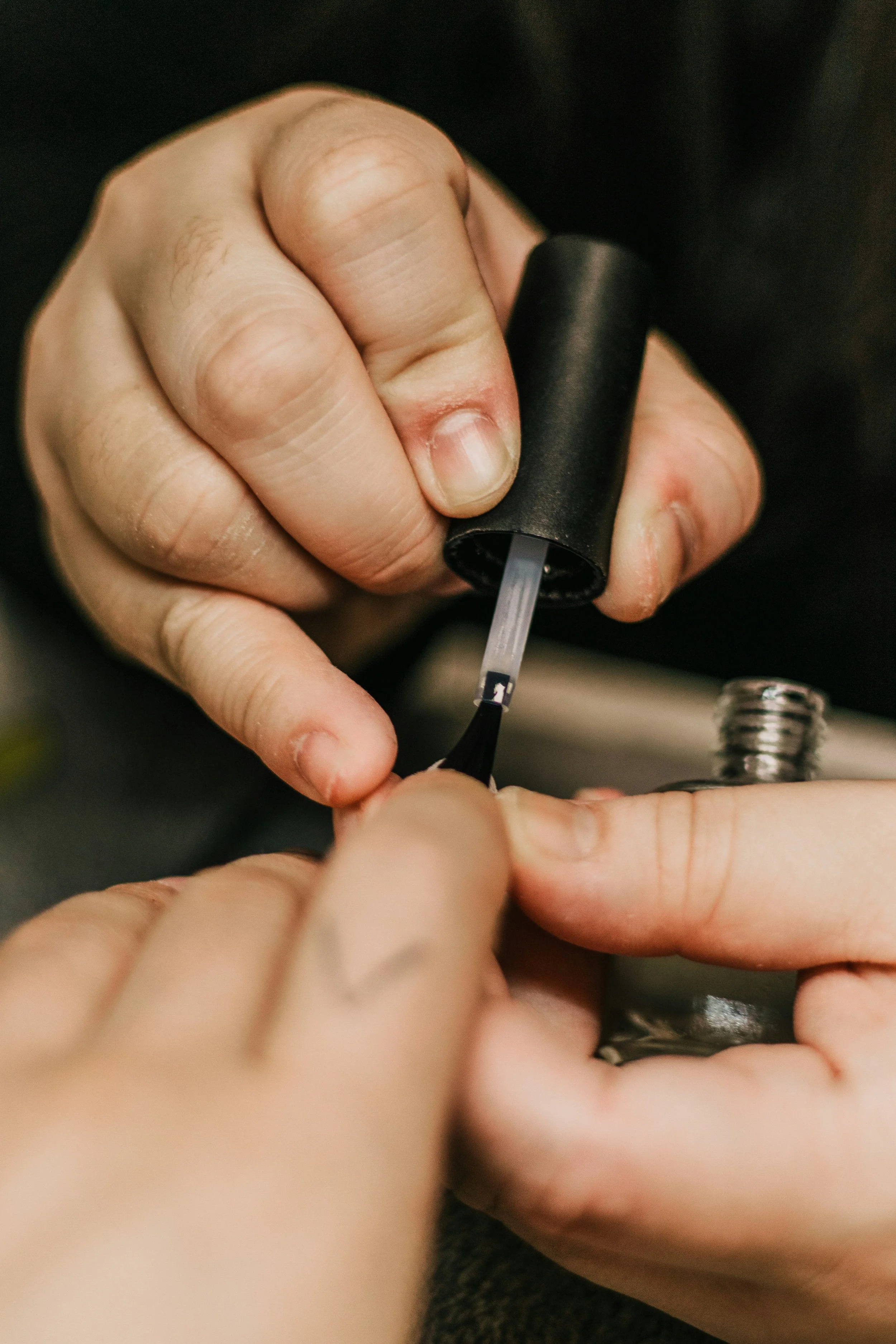
My nail color doesn't come out of a bottle. It comes out of two. Lynn puts them on one coat at a time, alternating, and she's been doing it for three years now.
I never asked her to. I never complained either. I'd been picking whatever was closest off the rack the way most of us do, and after watching me do that a few times she said she thought we could get nearer to what I actually wanted if she blended it herself. So now there's a color that exists only in her hands and only for me. It takes her longer every single visit. She has never once mentioned that.
That's what I keep chewing on. She noticed something I hadn't bothered to say out loud, and then she went and fixed it.
Lynn is my nail tech. She's also on the President's List at Valencia, working about sixty hours a week between the salon and her coursework. Her parents came here from Vietnam. She went to a Title I high school and there was no family money waiting to cover tuition, so she got her nail license to pay for the degree herself. That was the whole plan at the start. Get licensed, fund school, get out.
Then she got good at it.
This is what I'm thinking about when I think about hiring now. AI can write the résumé. It can make almost anyone sound impressive on paper. So what are we actually hiring for, and what can we verify?
The answer isn't another credential or a better-written summary. It's the evidence underneath the title. The clients someone kept. The problems they noticed before anyone asked. The trust they earned. The judgment they exercised when nobody was watching.
If the résumé is no longer proof, we have to get better at looking for what is.
THE PART NOBODY COUNTS
Here's what she's built while doing all of that. Forty-some regular clients. About a hundred dollars a month each. That's roughly forty-eight thousand dollars a year of repeat business, and she built every dollar of it herself, from zero, with no advertising, mostly on referrals from women who couldn't stop talking about her.
Ask any business owner you know what they'd pay for a customer list that renews itself twelve times a year with no acquisition cost. Then look at where that skill currently sits, which is in a chair, in a strip mall, held by a twenty-something who will write "Nail Technician, 2022 to present" on a résumé and watch a hiring manager's eyes slide right past it.
I've sat on the other side of that stack. I know exactly how fast that scan goes. We are all trained to look for the words we recognize, and "nail technician" is not one of the words, so the skills and business she has built underneath it never gets read.
That's our problem, not hers.
WHAT THE SCREEN STILL CAN'T SEE
Employers will tell you they already fixed this. They hire for skills now, they say. They dropped the degree requirement.
I believe the intent. I don't believe the screen. It still runs through a person reading a stack at speed, and that person is reading for words. Nail technician is not one of the words.
We didn't stop filtering by credential. We just stopped calling it that.
WHAT GETS CHECKED NOW
Anybody can produce a beautiful paragraph about their commitment to client service in about four seconds, for free. That paragraph is worth nothing. What's left worth anything is the stuff that had to be true before anyone wrote it down.
Lynn has clients who've stayed for years. Referrals she never asked for. Prices she set and held. Grades she earned inside a sixty-hour week. And a color she invented for one woman because she was paying attention.
Every bit of that can be checked by somebody who bothers.
BALANCE
I'm going to say something here that won't make me popular.
I hear the word balance constantly now, and most of the time it's being used to argue for doing less. Not less of something you hate, which is a real problem and worth solving. Just less. The word has quietly turned into permission.
Lynn works sixty hours a week and she goes to concerts. She travels. She takes the trip. When I asked her how on earth she has the energy she told me another COVID could happen at any time, so you have to go live your life.
And this matters to the hiring conversation, too. I'm not looking for people who want balance. I'm looking for people who know what they want badly enough to work for it.
Lynn works sixty hours a week because she has somewhere she's trying to get. She also goes to concerts and takes the trip. She isn't asking work to fit neatly around her life. She's building the life she wants, and she's willing to pay for it.
She isn't balancing anything. She's not standing there with a scale in her hands weighing work against rest and trying to get the needle to sit still. She decided what she wants and she's paying for it on both ends, which costs her sleep and probably costs her a social life some weeks, and she seems clear-eyed about the trade.
I'd take ten of her.
FIVE MOVES TO MAKE NOW
If you're hiring, this is where I think we start: stop treating the résumé as the evidence and start treating it as the lead. Then go looking for the things underneath it that are harder to manufacture and easier to verify.
PULL THE LAST THREE PASSES Not the finalists. The three who never got a phone call. Go find out what they were actually running, the thing underneath the job title. I'd put money on at least one of them carrying a book of business you'd respect if it had come with a different noun on the front.
ASK FOR THE BOOK, NOT THE TITLE Four questions, and they work on anybody from any industry. How many people come back. For how long. At what price. And who sent them. A candidate who can answer all four is running a business, whatever the badge says.
ASK ABOUT THE UNASKED FIX "Tell me about something you changed for a customer who never complained." That question has no good generated answer, because the answer requires having been in a room with somebody, on a Tuesday, noticing. Watch what happens to the ones who have to invent it.
VERIFY ONE CLAIM THIS WEEK Pick a single line on a single résumé and make the call. Retention survives a phone call. Referral survives a phone call. A paragraph about passion for excellence does not. This takes eleven minutes and it will change what you trust for the rest of the year.
COUNT YOUR OWN CHECKABLE Then do it to yourself. Write down everything about your last year that somebody could confirm without taking your word for it. The renewals, the people who followed you, the promise you kept when it cost you. Whatever isn't on that list was never your credibility. It was your formatting.
Lynn's going to get hired by somebody this year. I hope whoever it is understands what walked in the door.
—
DOES YOUR HIRING BENCH KNOW WHAT IT'S LOOKING AT?
I run the Human in the Room Audit, a diagnostic of Presence, Judgment and Trust across your team.
• A scored baseline for every leader on the bench • The gaps ranked by what they are costing you • A 90-day plan to close them
Most organizations have no idea where their credibility actually sits until a deal stalls, a hire fails, or a key person walks out the door. Find out before that happens.
Book the audit → info@humanintheroombook.com
Betsy Gardner is the author of Human in the Room: The New Art of Presence, Judgment & Trust, and CEO of the Winter Park Chamber of Commerce.
